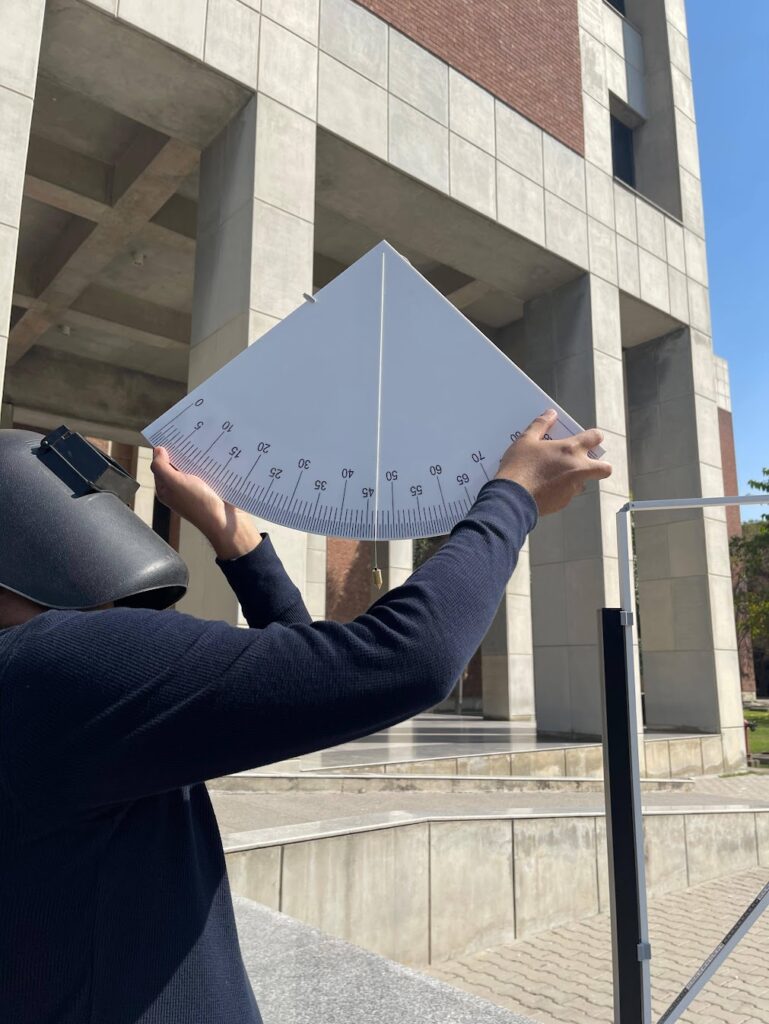
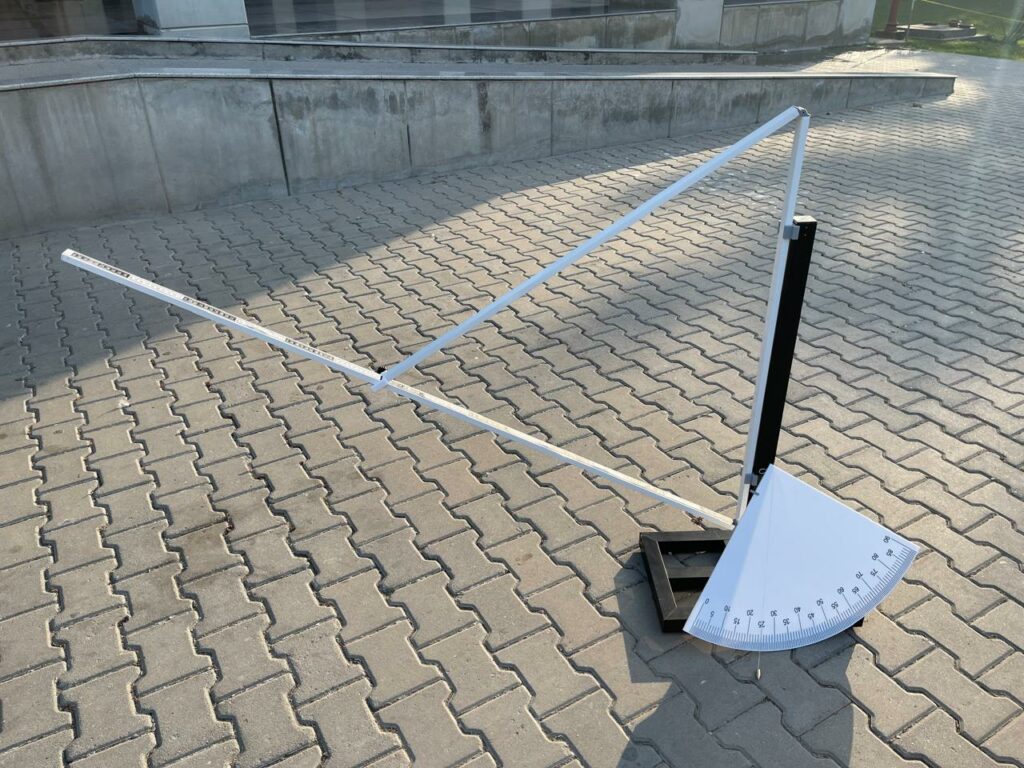
Long before modern technology, second century astronomers like Claudius Ptolemy, and later, practitioners of the Islamic Golden Age, looked up at the stars and designed remarkable tools to measure the heavens.
Driven by the need to find the direction of the Qibla and calculate the five daily prayer times, they perfected instruments like the Quadrant (رُبع) and the Triquetrum (العغادۃ الطویلۃ – the long alidade).
In this experiment, which is also a part of the Phenomenon Lab series, invites users to employ modern incarnations but close matches of the quadrant the triquetrum to track heavenly bodies, notably the sun and the moon and compare experimentally observed data with modern softwares.
Lab Resources
Here is a sample report generated by the quadrant and the triquetrum. This is the link for Stellarium.